Car Loan Interest Rates in 2026
Typical APR ranges by credit tier, what moves your rate, and how to know a good offer when you see one.
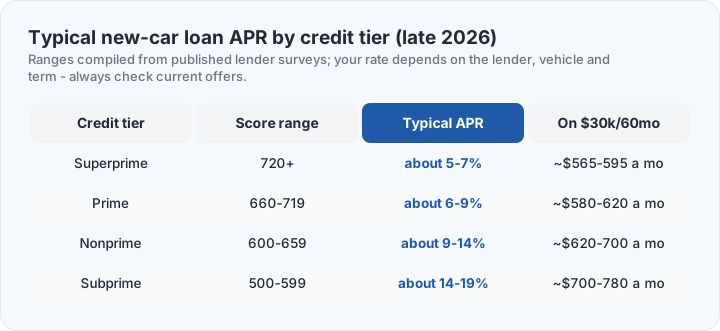
Your APR is set by four things, in rough order of power: credit tier, the lender's appetite (credit unions routinely beat banks and dealer desks), the term (longer terms usually price higher), and the vehicle (new vs used — used loans typically run 1-3 points above new).
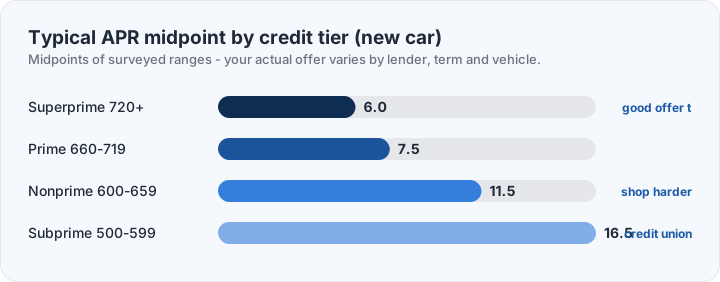
The ranges above are compiled from published lender surveys and hedged deliberately: rates move weekly, and two lenders can be a full point apart on the same street. Treat the table as a lie detector for finance offices — if you are superprime and someone offers 11%, the table says keep walking. If you are rebuilding credit and someone offers 9%, that is a genuinely good offer.
Three practical levers, in order of payoff. Credit unions first: their business model is member rates, and pre-approval costs you nothing. Shop inside a window: multiple auto-loan inquiries within 14 days count as one for most scoring models, so collect three offers without fear. Watch the term-price interaction: stretching from 60 to 72 months can raise the rate itself — type both scenarios into the payment calculator and compare total interest, not just the monthly number.
One dealer-desk pattern worth naming: "we can get you approved" sometimes means "at a rate with a markup on top." Your pre-approval from a credit union is both a fallback and a ceiling — the desk either beats it or loses the deal.
Frequently asked questions
What is a good car loan rate in 2026?
For superprime credit (720+), mid-single-digit APRs on new cars are common — anything near 5-6% is good, and credit-union offers sometimes beat that. Used-car rates run higher across the board.
Why is my used-car rate higher than new-car rates?
Used vehicles carry more lender risk (unknown history, lower collateral value), so typical pricing runs roughly 1-3 points above equivalent new-car loans.
Can I negotiate the APR?
With a lender, sometimes — credit unions especially. With a dealer, the rate is whatever the bank set plus any markup; your pre-approval is the counterweight.
Does the loan term change my rate?
Usually yes — longer terms price slightly higher because the risk window is longer. Compare total interest across terms in the calculator, not just the rate.
Do credit unions really offer better rates?
Often, yes — their member-first model routinely prices one to three points under dealer-desk offers for the same credit profile. Membership is usually a formality (a small charity donation or employer/area tie). Get the credit-union quote first and make the desk beat it.
What APR gap makes refinancing worth it?
A practical bar: if today offers are at least two points under your current rate and you have more than two years left, run the refinance calculator — that gap usually clears fees with room to spare.