Car Sales Tax: How It Works and What You Will Pay
Who collects it, what gets taxed (rebates? trades?), and why the same car costs a different total across state lines.
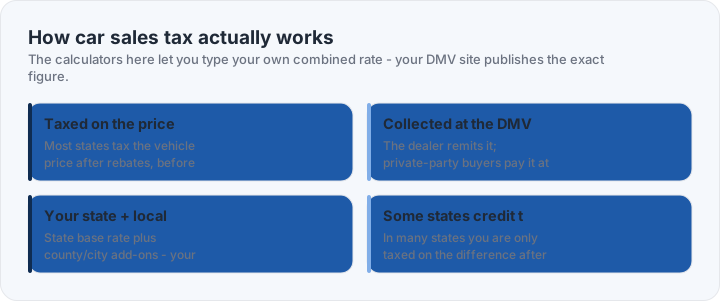
Car sales tax is usually the second-biggest number on a deal sheet after the price itself, and it is the one buyers understand least. The mechanics: most states tax the vehicle's price after rebates but the treatment of trade-ins varies — in many states you are taxed only on the price minus your trade-in value, which makes a trade worth real extra money in those states. A few states tax the full price regardless.
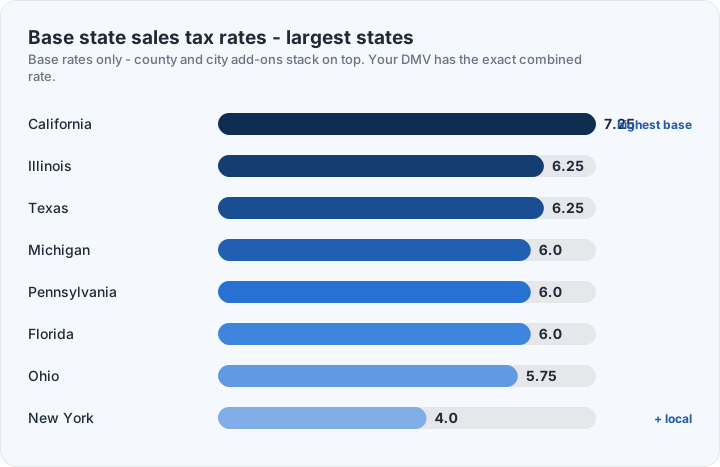
Base state rates for the largest markets (verify your exact combined rate — county and city add-ons sit on top, and your DMV/registration office has the authoritative figure, October 18, 2026): California 7.25%, Texas 6.25%, Florida 6.00%, New York 4.00% (plus heavy local add-ons), Illinois 6.25%, Pennsylvania 6.00%, Ohio 5.75%, Georgia 4.00% (local add-ons), Michigan 6.00%, North Carolina 3.00% (local add-ons). On a $30,000 car, the spread between the highest and lowest of these is more than a typical month's payment.
Private-party sales change the collection point — the buyer pays the tax at registration rather than the seller collecting it — and some states tax private deals on book value instead of price. Fees (title, registration, documentation) are generally not taxed, but they are added to the amount financed in most deals, which means you pay interest on them for the whole term — one more reason the payment calculator's fees box matters.
Frequently asked questions
Do I pay sales tax on a used car?
Yes — used cars are taxed like new ones in most states, sometimes on book value in private-party deals. The rate and base are the same machinery.
Is my trade-in taxed?
The trade itself is not taxed; in many states it also shrinks the taxable price of the new car (tax only the difference). A few states tax the full price — your DMV site states which.
Can I deduct car sales tax?
Historically, itemizers could choose state income tax or sales tax deduction — rules change by tax year. Check current IRS guidance or a tax professional.
Why does the dealer tax number differ from mine?
Three usual reasons: county/city add-ons on top of the base rate, trade-in credit (some states tax only the difference), and fees that some states tax while others do not. Ask for the taxable amount and rate separately — then verify against your DMV published combined rate.
Do leases have sales tax?
Yes — most states tax each monthly lease payment rather than the full vehicle price, which is why lease and buy taxes are computed differently. Enter your state treatment in the lease calculator tax box.
Which state has the highest car sales tax?
Oklahoma's combined rate and some Louisiana parishes top the practical charts once local add-ons stack; California's 7.25% is the highest base state rate among large states. Your registration office has the only number that matters — yours.