Car Finance Calculator
Type the numbers, see the payment on the same keystroke. Price, trade-in, tax, fees, rate and term — with the interest cost laid out beside it. Nothing to sign up for.
Everything computes instantly as you type — your inputs also fill the address bar so you can bookmark a scenario. Nothing is sent anywhere.
How the payment is built
Four numbers decide your monthly payment, and only one of them is really about the car. The amount financed is the price minus your down payment, rebate and any trade equity, plus sales tax and fees — this is the number interest compounds against. The APR sets the rent you pay on that money every month. The term spreads it out. And your credit tier quietly drives the whole table.
The order of operations matters more than most buyers expect. Sales tax in most states is computed on the price after rebates, and in many states you are only taxed on the difference once your trade-in is credited — which is why the same car can produce different payments in neighboring states. Fees (title, registration, documentation) are small individually and not small in total; typing them in changes the picture more than a round of haggling sometimes does.
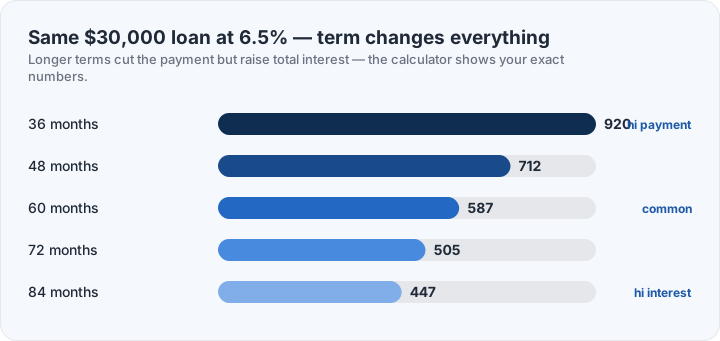
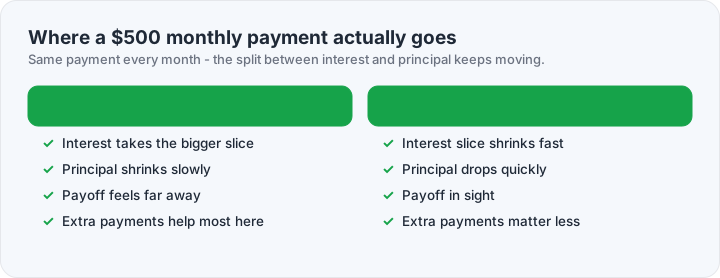
Watch the first payment split that appears beside your result: at 6.5% on a $30,000 loan, interest eats roughly $160 of a $587 payment on day one. That share falls every month — which is also why extra payments early in the loan do disproportionate work, and why the payoff calculator on this site shows savings that surprise people.
What a typical buyer should sanity-check
Before you fall in love with a specific car, reverse the math: decide the monthly budget first, then let the affordability calculator tell you the price range that fits it. It is the same arithmetic run backwards, and it is the single best guard against monthly-payment myopia at the dealership.
Second, check your rate before you shop for cars, not at the finance desk. Credit unions and banks will pre-quote you in minutes; a pre-approval in your pocket is both a bargaining chip and a ceiling. Our rates page lists typical APR ranges by credit tier so you know whether the offer in front of you is good.
Third, be honest about the term. Long loans exist for a reason, but the interest column in the calculator shows exactly what "affordable" is costing you. If the 60-month payment hurts but the 84-month total hurts more, the honest fix is a cheaper car — the numbers make that conversation with yourself much easier.
Frequently asked questions
How is a car payment calculated?
Monthly payment = loan amount × monthly rate ÷ (1 − (1 + monthly rate)^-months). The loan amount is the car price minus down payment, rebates and trade equity, plus sales tax and fees. The calculator above applies this exact formula instantly.
How much should I put down on a car?
Twenty percent down is the classic rule - it keeps the loan smaller than the car's value after the first-year depreciation drop. Even 10% meaningfully cuts the payment and total interest; zero-down maximizes both.
What interest rate will I get?
It depends mainly on your credit tier: superprime (720+) buyers commonly see mid-single digit APRs, while subprime buyers can see mid-teens. Our rates page lists typical ranges by tier - your actual offer depends on the lender, term and vehicle.
Is a 72 or 84 month loan a bad idea?
It trades cost for affordability: the payment drops but total interest rises a lot, and you risk owing more than the car is worth for years. If you need a long term to fit the budget, a cheaper car usually beats a longer loan.
Does my trade-in reduce sales tax?
In many states yes - you are taxed only on the difference between the price and your trade-in value. A few states tax the full price. Our calculator has a state-note and lets you model either way.
Is this calculator free and private?
Yes and yes. Every calculation runs locally in your browser - no signup, no data sent anywhere, no cost.